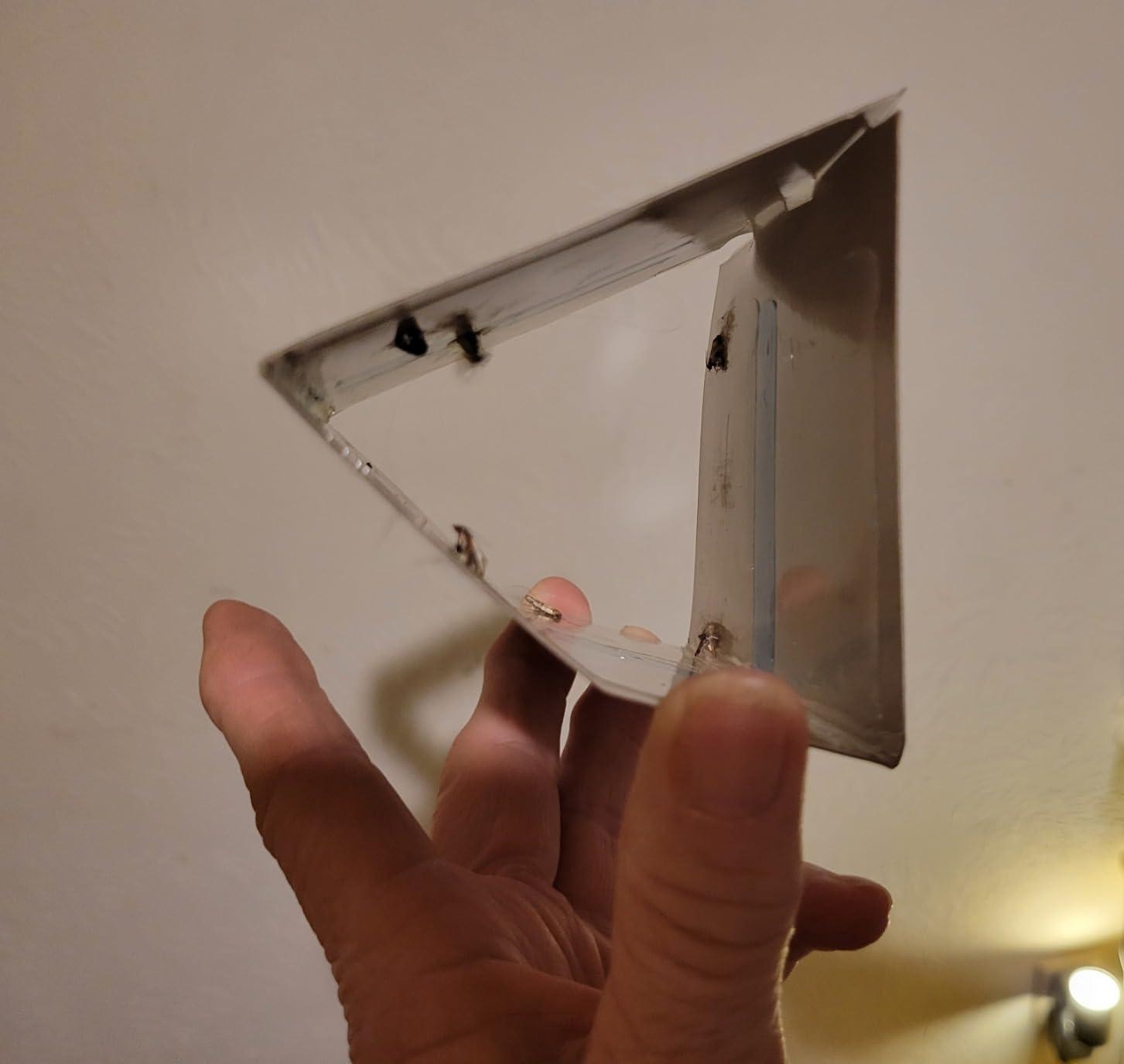
If you search for "clothes moth traps" on any marketplace you get an avalanche of cardboard tents that all look suspiciously similar. Some talk about "extra powerful pheromones", others just say "moth attractant".
Under the hood there is real chemistry and species specific biology here. Understanding that makes it a lot easier to tell which products are likely to work and which ones are decorative cardboard.
How a clothes moth finds love
Male clothes moths do not go on dates. They fly around sniffing for an invisible smoke signal released by females.
That signal is a blend of a few very specific molecules called sex pheromones. The male's feathery antennae are packed with receptors tuned to exactly those shapes and the ratio between them. This high specificity is how different moth species avoid getting their mating signals crossed.
Species differentiation & host specificity
In the case of the webbing clothes moth, researchers in the 1980s isolated two aldehydes from female moths and named them Koiganal I and Koiganal II. Their chemical names are:
- Koiganal I – (E) 2 octadecenal
- Koiganal II – (E,Z) 2,13 octadecadienal
Together, in the right ratio, they form the female webbing clothes moth sex pheromone.
Synthetic versions of these two molecules are the heart of modern clothes moth traps.
What is inside a good trap
A typical professional clothes moth trap has two parts:
- The lure – a small rubber septum, plastic vial or polymer "bullet" that contains a precisely measured amount of Koiganal I and II.
- The sticky surface – usually a cardboard delta or tent trap lined with a very sticky glue.
The lure slowly releases pheromone over weeks or months. Male moths follow the scent gradient and get stuck on the glue. They are removed from the breeding population and, more importantly, give you a clear signal that moths are present.
Technical sheets from commercial suppliers
All tell roughly the same story:
Evergreen Growers Supply describes their webbing clothes moth lure as a gray rubber septum loaded with E 2 octadecenal and E,Z 2,13 octadecadienal and gives a field life of around 30 days.
Catchmaster clothes moth traps list the active as a mixture of E,Z 2,13 octadecadienal and E 2 octadecenal in a laminated dispenser.
Insects Limited's "Clothes Moth Bullet Lure" uses their proprietary Bullet Lure technology to release pheromone for up to three months and is designed to attract webbing, case making and brown dotted clothes moths.
Field work with these lures shows they are highly attractive to male webbing clothes moths and very useful for monitoring populations in wool warehouses and similar environments.
Are all clothes moth traps created equal
Short answer: no.
At the chemistry level, most serious products are using the same two molecules. In the European Union, "webbing clothes moth pheromone mixture" is an approved biocidal active substance, and a long list of brands and trap products are all authorized based on that same mixture.
The differences show up elsewhere.
1. Target species
Some lures are tuned just for webbing clothes moth. Others combine pheromones for webbing and case making clothes moth, or even add pantry moth blends in the same trap. A trap that tries to be a universal moth solution may be convenient, but you want to be sure it is actually optimized for the species eating your clothes.
Professional suppliers often list separate lures for Tineola bisselliella (clothes moth) and Plodia / Ephestia species (stored product moths).
2. Lure design and loading
The same chemical mix can be packaged in different matrices:
- Rubber septa that release pheromone steadily for around thirty days.
- Polymer "bullets" or beads that maintain a controlled release for up to three months.
- Laminated PVC dispensers sealed into the trap itself.
The amount of pheromone loaded into each lure is not usually printed on consumer packaging, but it is set high enough to be attractive and low enough to avoid overwhelming the moths. Males are tuned to a certain range of concentration and ratio. Too little is invisible. Too much can create a confusing cloud rather than a directional trail.
3. Adhesive quality and trap geometry
Even the best lure is wasted if the glue is weak or dries out in a week.
Good traps use very tacky, slow drying adhesives and protect them from dust with a tent shaped housing. Cheaper generic traps sometimes use thin glue layers that let moths escape or dry to uselessness well before the lure is exhausted.
Independent buying guides routinely comment that stronger adhesives and better housing design correlate with more moths on the card.
How long does a trap really work
Manufacturers usually quote two numbers:
- Lure life – often 4 to 12 weeks depending on the design. Bullet lures aimed at professional users often say up to 3 months, while simple septa lure inserts might be rated for 30 to 60 days.
- Trap life – essentially "until the glue is full of dust and insects".
In practice, replacement schedules tend to follow the lure, not the glue. Many pro IPM programs swap lures monthly or quarterly as a matter of routine.
Heat speeds up pheromone evaporation and chemical breakdown, so traps stored in a hot warehouse or used in a warm attic may exhaust faster than the label suggests.
Can you tell how much pheromone is on a consumer trap
Usually no.
Safety data sheets and regulatory dossiers list the active ingredients and sometimes their concentration as a percentage of the lure vial or septum, but not in a way most shoppers will ever see.
That said, you can make smarter guesses:
- Products that list the actual chemical names E 2 octadecenal and E,Z 2,13 octadecadienal and have a clearly defined lifetime are more likely to be using a standardized lure.
- Traps that arrive with lures individually foil wrapped keep the pheromone protected until you open them.
- Vague claims like "pheromone technology" with no species listing or active ingredient are a red flag.
Do pheromone traps actually control clothes moths
Pheromone traps are first and foremost a monitoring tool.
They do reduce male numbers and can slow population growth, especially in small enclosed spaces like closets. But they do not attract or kill females or larvae, which are the ones doing the damage. You still need cleaning, freezing and sealed storage.
Museum IPM guides and heritage pest control companies stress this point repeatedly.
How to pick decent traps in a marketplace full of cardboard
When shopping for traps, use this checklist:
Look for traps that state they are for clothes moths or webbing and case making clothes moths, not just "moths" in general.
Check for active ingredients listed as E 2 octadecenal and E,Z 2,13 octadecadienal or a phrase like "webbing clothes moth pheromone mixture".
Prefer brands that publish safety data sheets or technical notes, not just marketing copy.
Prefer traps with individually sealed lures.
Be skeptical of products that claim to work for both pantry and clothes moths in a single lure without any detail, or that claim a single trap covers an entire house.
References
- ScienceDirect: Sex pheromone
- LookChem: Koiganal compounds
- Evergreen Growers: Webbing Clothes Moth Lure
- DoMyOwn.com: Catchmaster Clothes Moth Trap SDS
- Labels Design Solutions: Webbing Clothes Moth SDS
- Academia: Monitoring of Webbing Clothes Moth
- ECHA: Biocidal active substances
- 1env Solutions: Moth pheromone lures
- ScienceDirect: Sex pheromone topics
- Pest Punch: Best moth traps and repellents
- veseris.com: Clothes Moth Bullet Lure
- American Museum of Natural History: Integrated Pest Management
- ICUP: Monitoring guidance
- Museum Pests: Webbing Clothes Moth
Understanding the chemistry helped me stop buying traps based on packaging. Now I look for the actual compound names and check if the product lists a lure lifespan.
What I'd do instead
- Look for traps that list E-2-octadecenal and E,Z-2,13-octadecadienal as active ingredients
- Choose traps with individually foil-wrapped lures to keep pheromone fresh until you use them
- Replace lures based on manufacturer timing, not when the glue fills up
- Avoid traps claiming to work for both clothes moths and pantry moths in one lure
If you're deciding what to try next
— Notes from testing this in a small NYC apartment